Accessible Websites: Mandatory Under the BFSG
Since June 28, 2025, a website must be accessible as soon as consumer services are offered through it. The Accessibility Strengthening Act (BFSG) makes digital accessibility a legal requirement for many businesses. With SiteCockpit, you make your content accessible to everyone—regardless of the CMS used—and implement legal requirements easily and with legal certainty.
Key Takeaways at a Glance
Accessible Websites Summarized
These four points summarize when a website must be accessible and how to make your content available to everyone.
-
 The BFSG has applied since June 28, 2025, for websites with B2C consumer offerings
-
The technical foundation relies on WCAG 2.2 Level AA and the EN 301 549 standard
-
All content, copy, and images must be accessible to people with disabilities
-
SiteCockpit works seamlessly with any CMS, including WordPress, TYPO3, or Contao
 Mandatory for many commercial websites under the BFSG since June 2025
Applies to services rendered via electronic commerce
Aligned with WCAG guidelines and standard EN 301 549
Accessible content expands your website’s reach to a wider audience
Mandatory for many commercial websites under the BFSG since June 2025
Applies to services rendered via electronic commerce
Aligned with WCAG guidelines and standard EN 301 549
Accessible content expands your website’s reach to a wider audience
When Must a Website Be Accessible?
The Accessibility Strengthening Act (BFSG) and its accompanying ordinance (BFSGV) require businesses to design their websites accessibly as soon as they offer consumer services through them. These obligations went into effect on June 28, 2025. Affected entities include online stores, booking portals, banks, insurance companies, and many other digital services.
The objective of the law is to make digital content accessible to all citizens. Specific requirements align with the Web Content Accessibility Guidelines (WCAG) version 2.2 Level AA. These guidelines and the EN 301 549 standard form the technical benchmark against which accessible websites are evaluated.
The BFSG ordinance (BFSGV) specifies these obligations in detail. Implementing these rules early ensures your website stays fully compliant. In doing so, companies facilitate digital inclusion for people with disabilities and maximize content reach. SiteCockpit audits your content automatically against this standard and highlights specifically which images, texts, or features to adjust—regardless of your CMS.
The Four Core Principles of an Accessible Website
WCAG 2.2 Level AA guidelines fall under four main principles. They show you how to structure content so it remains accessible to everyone, including users with impairments.
1. Perceivable
Images, text, and videos must be identifiable by all users—through alternative text, captions, and proper visual contrast.
2. Operable
Your website must be fully operable via keyboard, offering clear navigation and visible focus indicators without requiring a mouse.
3. Understandable
Clear language and readable typography make content easy to digest for everyone, complemented by Plain Language where helpful.
4. Robust
Your web content must perform reliably across all devices and stay compatible with assistive technologies such as screen readers.
Who Must Implement These Requirements?
The obligations affect significantly more companies than many expect. In principle, any business offering products or services to consumers via its website must comply. Examples include e-commerce shops, banks, insurance providers, travel portals, and e-book distributors.
Exemptions apply exclusively to microenterprises with fewer than 10 employees and a maximum of €2 million in annual turnover regarding service offerings. All other businesses must provide accessible content and comply with legal requirements, making online services available to everyone.
-
Applies to companies offering consumer-facing digital services
-
Examples: Online stores, banks, insurance agencies, booking & ticketing portals
-
Exemptions apply only to microenterprises under €2 million annual turnover
-
Requirements apply universally, regardless of the underlying CMS
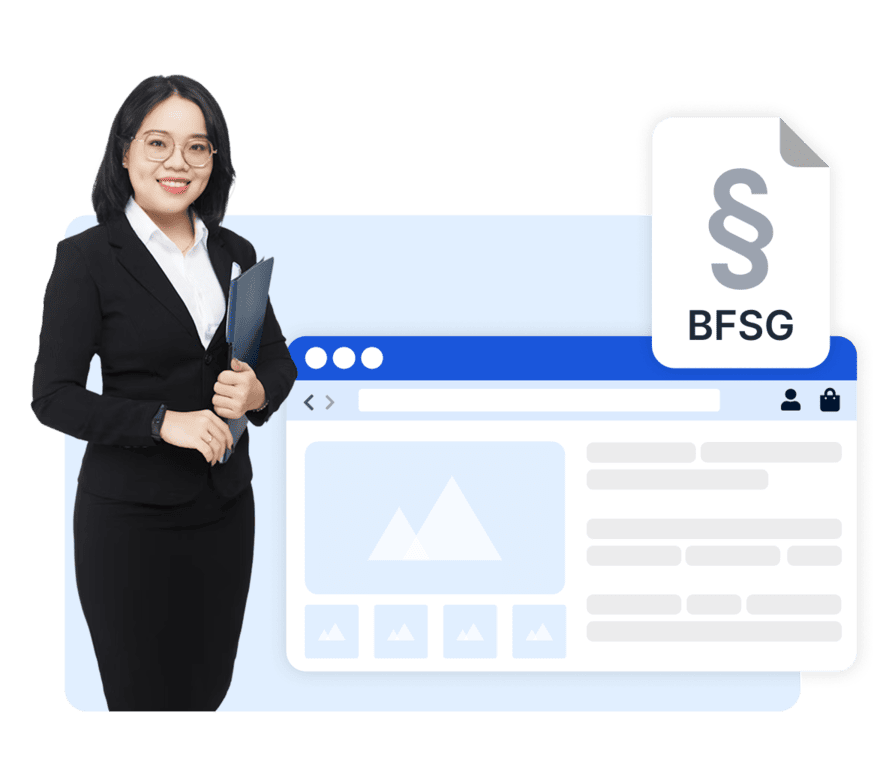
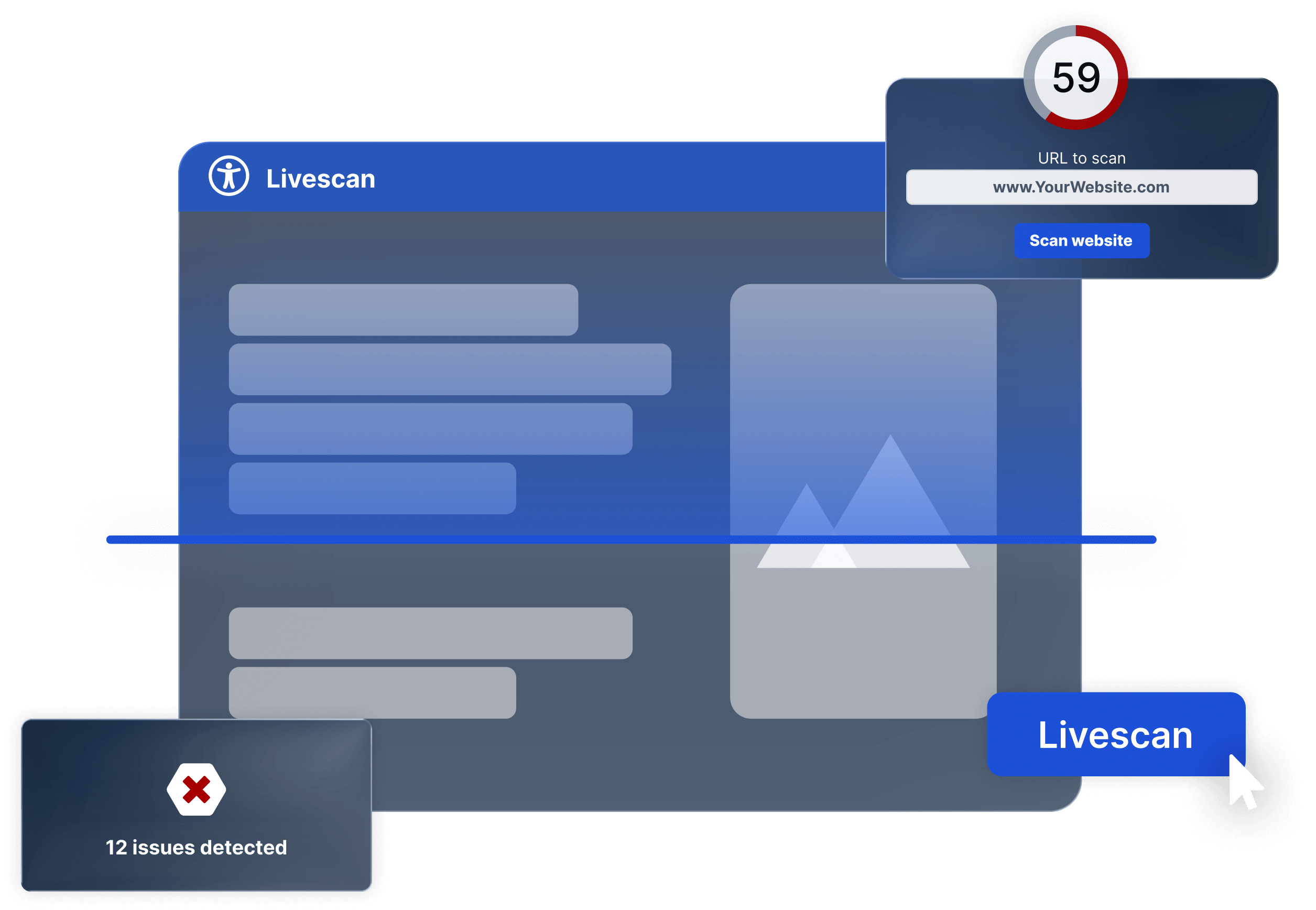
Find digital barriers with our Live Check!
Click, test, optimize - that is how simple it is to create an accessible website. Use our free live check and gain valuable know-how from our whitepaper.
Accessibility as a Competitive Advantage for Your Business
An accessible website does not just meet legal demands—it reaches more people. Millions of citizens live with disabilities, alongside many others with temporary or age-related limitations. Accessible web content opens your online offerings to all these users.
-
Mandatory under the Accessibility Strengthening Act since June 28, 2025
-
Broader reach: accessible offerings connect with more users
-
Legal certainty: protect against formal warning letters and fines
Well-structured, accessible content elevates user experience across the board, builds brand trust, and positively influences search engine rankings (SEO). Resolving digital barriers early also prevents legal risks, protecting your organization from warning notices and administrative fines.
SiteCockpit pinpoints digital barriers on your site—such as images lacking alt text, poor contrast ratios, or broken keyboard navigation. This enables you to systematically improve accessibility while keeping transparent, audit-ready records.
Your Complete Solution
Five Steps to Digital Accessibility
1. Initial Audit: Scan your website using our free Livecheck tool to uncover current digital barriers.
2. Set Up Monitoring: Enable easyMonitoring for automated WCAG 2.2 AA testing.
3. Deploy Instant Fixes: Integrate easyVision and generate missing alternative text for media using easyAlt.
4. Make Content Accessible: Use easyTranslate to publish accessible language variants.
5. Generate Documentation: Create a legally compliant accessibility statement via easyStatement.
Our Products for Your Accessible Website
Our product suite supports your entire accessibility journey. With SiteCockpit products, implement all legal requirements simply, scalably, and independently of your system architecture. Each module can be deployed standalone or combined—from auditing and remediation to compliance documentation. Organizations of any size can find the exact tools for their website.
easyVision
Personalized accessibility controls such as high-contrast modes, reading aids, and keyboard settings directly on your site.
easyMonitoring
Automated website scanning for digital barriers alongside actionable remediation tasks.
easyStatement
Legally compliant accessibility statements, generated automatically and easily customizable.
easyAI
AI-powered assistance for web accessibility and automated content optimization.
easyAlt
Automated alternative text generation for images—fast, consistent, and WCAG-aligned.
easyTranslate
Accessible translations and simplified language options for your web content.
Workshops
Practical training to master accessibility implementation within your existing workflow.
Webinars
Live sessions providing practical guidance, industry best practices, and live Q&A on digital accessibility.
Works Seamlessly with Any CMS
We offer tailored integrations for all popular content management systems, ensuring maximum flexibility and long-term compatibility.






Your platform, our solution.
Haven't found your CMS listed? Contact us for custom integration options.
Technical Requirements: WCAG 2.2 and EN 301 549
The technical foundation rests on the Web Content Accessibility Guidelines (WCAG) at Level AA. These rules and the EN 301 549 standard define how accessible web content must be built. Specifically, this mandates meaningful alternative text for visual media, adequate contrast ratios between text and background, readable typography, full keyboard operability, and complete screen reader compatibility.
-
WCAG 2.2 AA standard, referenced via EN 301 549
-
Color contrast, readable copy, keyboard controls, and screen reader support
-
Accessible content using plain language, independent of your CMS
Clear language and intuitive visual hierarchy are equally crucial to ensure content remains understandable and accessible. These standards apply to every site, regardless of the technology stack or CMS used. SiteCockpit audits your website automatically against web accessibility criteria and provides concrete remediation steps.
Flexible Packages and Pricing at a Glance
Unlock the full potential of digital accessibility with flexible packages tailored to your company.
Starter
- Website Widget
- 1 Domain
- Accessibility Statement
- 2500 Credits per month
- 1 User
- easyMonitoring
- easyALT (aut. Alt attributes)
Pro
- Everything from Starter +
- 2 Domains
- 10,000 Credits per month
- easyMonitoring
- 3 Users
- easyTranslate (Live-Translation)
- Integration service
Premium
- Everything from PRO +
- 5 Domains
- 30,000 Credits per month
- easyLanguage
- 10 Users
- Key-Account & Personal Onboarding
- Assistance with inspections by the authorities
Enterprise
- Individual requirements
- Key account support
- Manual audits and training courses
- Support with audits by authorities and with content-related issues through warnings (no legal advice)
- 99.9% SLA
** Note: Vouchers are non-transferable, not combinable with other discounts and can only be redeemed online. A cash payment is excluded.
Have questions? We are here to help.
Whether you need an initial consultation on accessibility regulations or tailored technical planning, our team is here for you. Make your website accessible alongside a partner who understands your needs.
Frequently Asked Questions About Accessible Websites
Under the Accessibility Strengthening Act (BFSG), operators must ensure digital content, text, media, and features are usable by everyone, including people with disabilities. Mandatory requirements took effect on June 28, 2025; non-compliance may result in administrative penalties.