Make WordPress accessible – with SiteCockpit
WordPress provides a good foundation. Whether your website is accessible, however, depends on your theme, plugins and content. SiteCockpit adds the easyVision accessibility widget, automated WCAG checks and an accessibility statement to your WordPress site – via plugin or embed code, without rebuilding your theme.








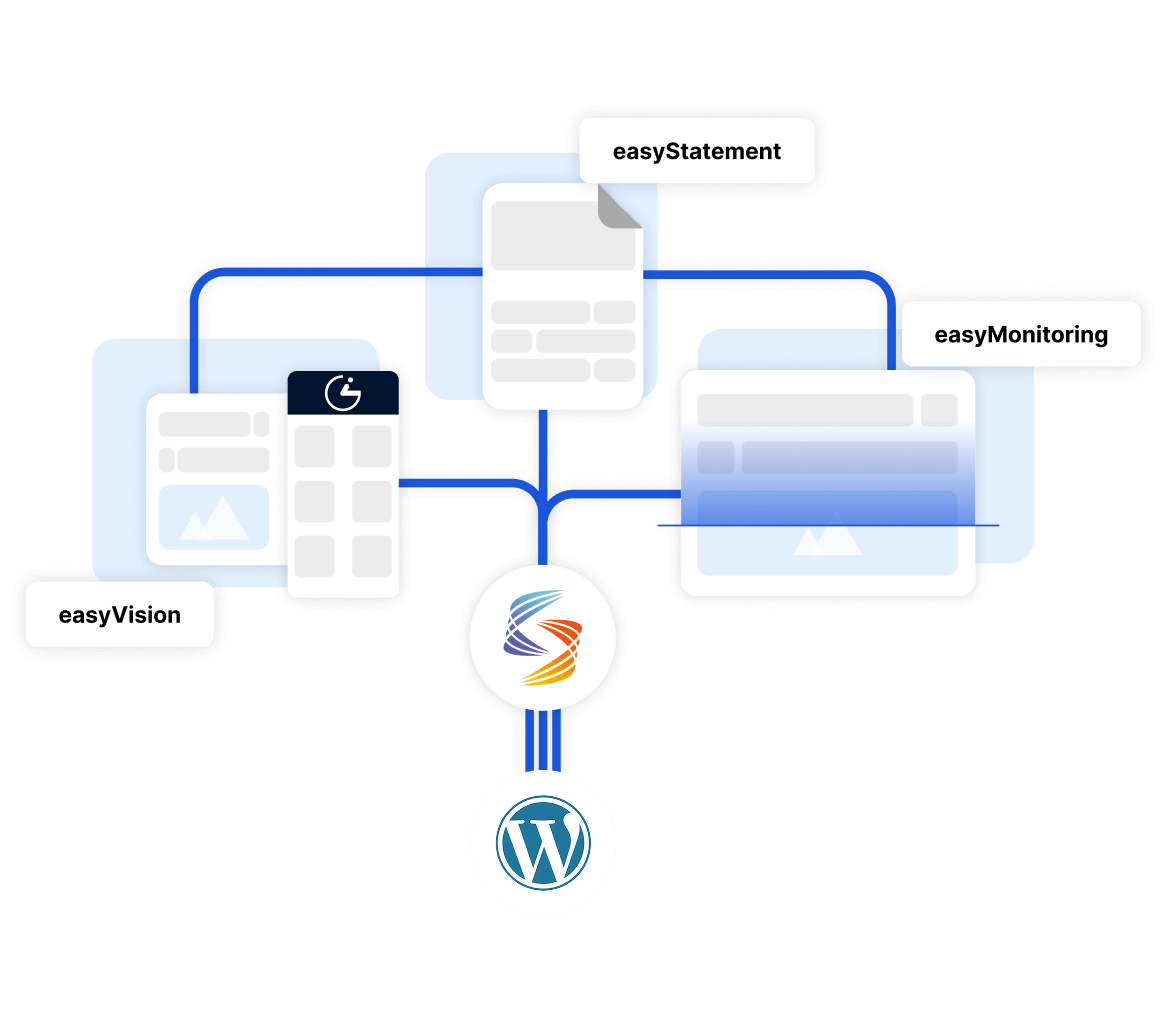
Plugin or embed code: two ways to integrate
The free SiteCockpit Integration plugin from the official WordPress plugin directory connects your website to your SiteCockpit account and adds the easyVision widget automatically.
Alternatively, you can insert the embed code from your SiteCockpit account yourself, for example via your theme or a code snippet plugin. Both ways are equally simple and lead to the same result. Our documentation explains how.
easyVision on your WordPress site in 3 steps
1. Install the plugin
In your WordPress admin, go to Plugins → Add New Plugin, search for “SiteCockpit Integration”, then install and activate it.
2. Enter your code
Copy the code from your SiteCockpit account and enter it in the plugin. The widget then appears on your website.
3. Customize and check
Adjust the button, icon, position and colors to your design in your SiteCockpit account. easyMonitoring checks your pages against WCAG automatically.
Accessibility is an opportunity for everyone.
Design impresses. Accessibility convinces.
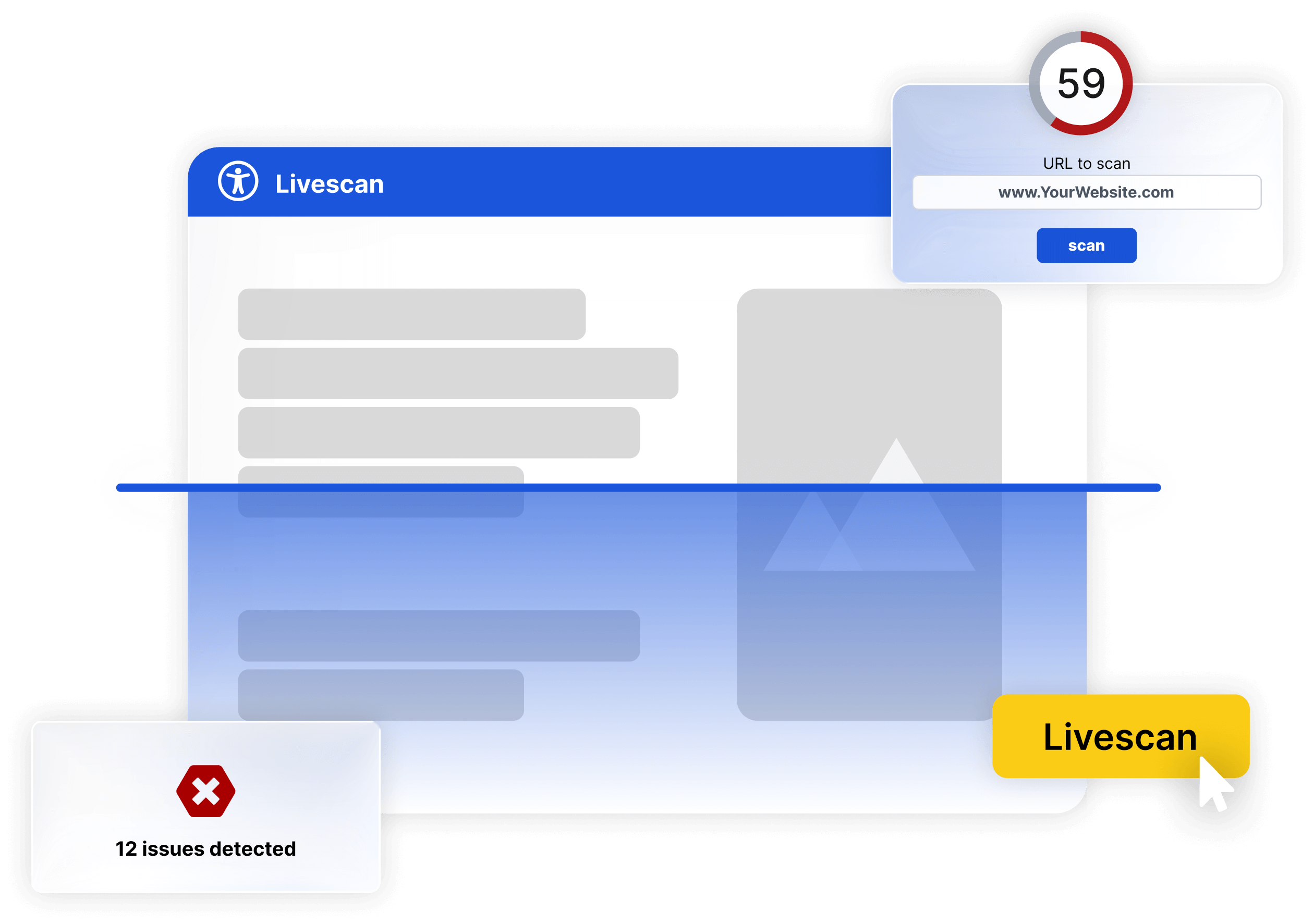
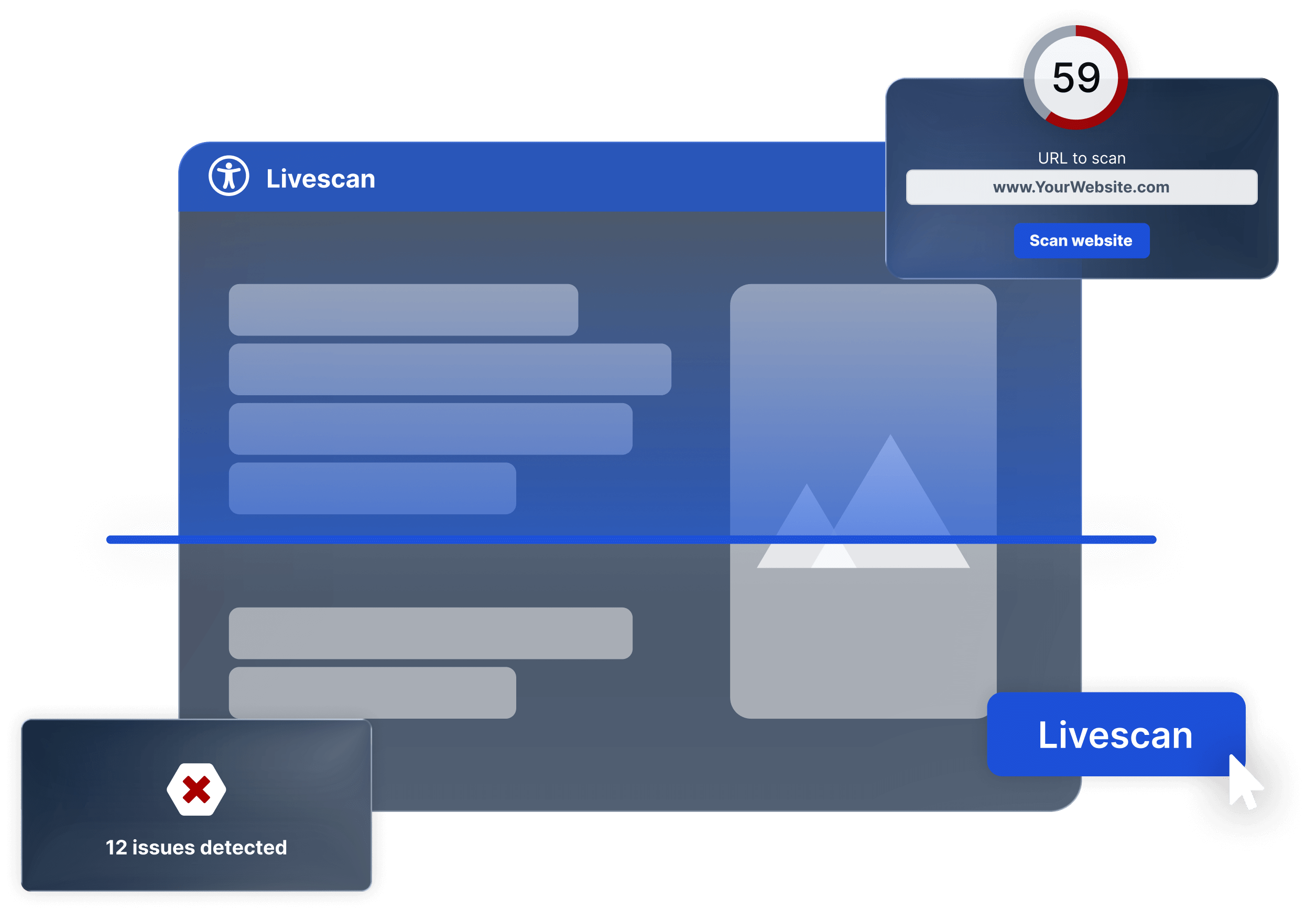
Try it now: how accessible is your WordPress site?
Our Live Check gives you an initial assessment straight away – no sign-up required. Enter the URL of your website and get an automated check of how well it meets key accessibility requirements.
Why WordPress is not automatically accessible
WordPress core has a clear goal: according to the WordPress coding standards, new and updated code is expected to conform to WCAG 2.2 at level AA. Most of what your visitors see, however, comes from your theme, page builder, plugins and your own content – and that is where most barriers arise.
-
 Images in the media library without alt text
-
Insufficient color contrast in the theme or in buttons
-
Headings that are only styled visually instead of using real heading elements
-
Sliders, menus and pop-ups that cannot be operated by keyboard
-
Form plugins without properly associated field labels
-
Link texts such as “click here” that do not name the target
The “accessibility-ready” theme tag in the WordPress directory is only a minimum requirement, covering things like skip links, keyboard navigation and contrast. According to WordPress, it explicitly does not mean that a theme meets WCAG level AA.
The list shows typical barriers on WordPress sites. Our lexicon explains the basics: alt text, semantic HTML, keyboard accessibility, accessible pop-ups and accessible links.
What SiteCockpit does for your WordPress site
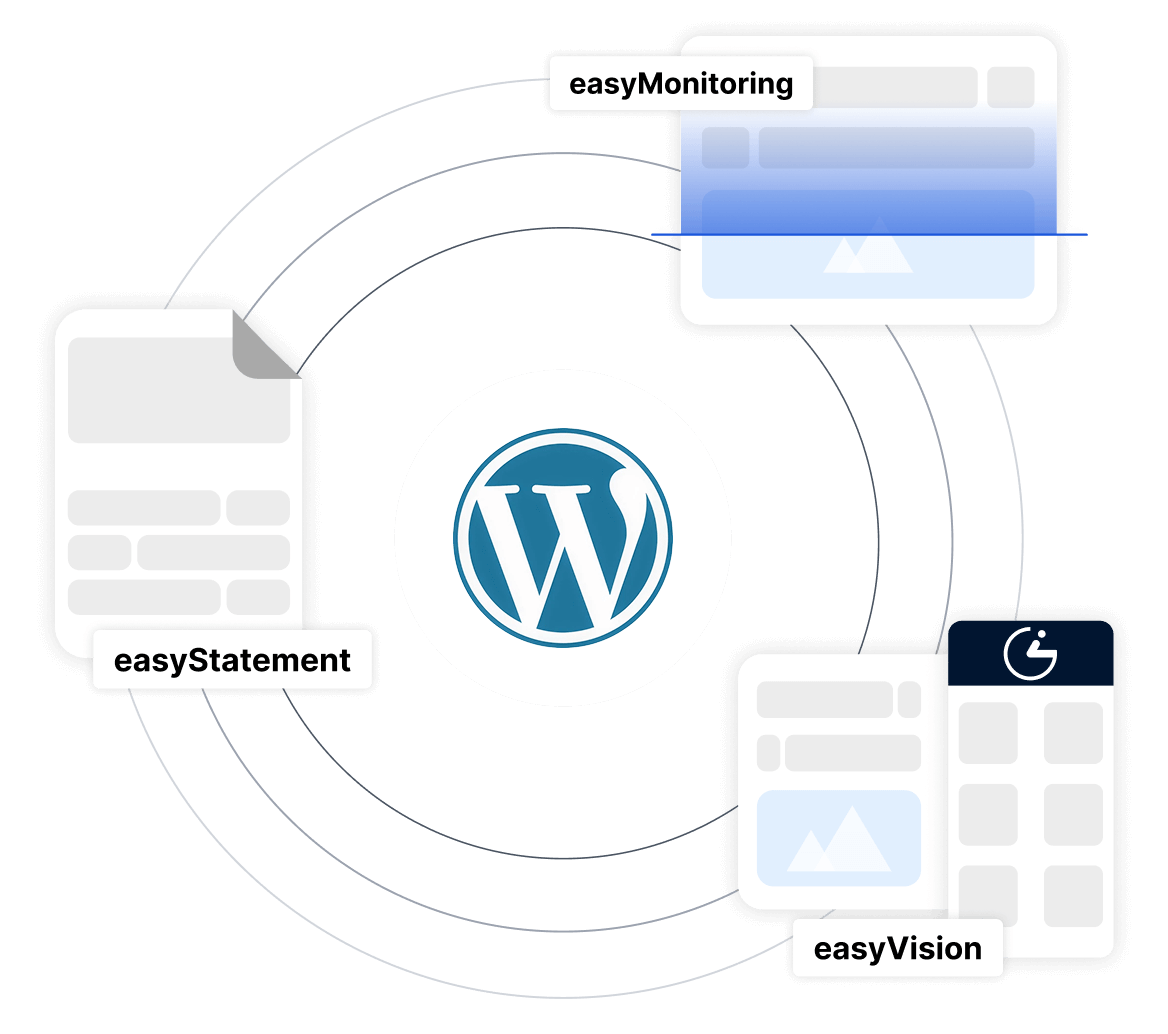
A widget alone does not make a website accessible. That is why SiteCockpit combines assistance for your visitors with tools that reveal barriers in your code and content.
easyVision
Your visitors adjust the display themselves: contrast, text size, line spacing, animations and more, plus profiles for dyslexia or low vision, for example.
More about easyVisioneasyMonitoring
Checks your WordPress pages against WCAG automatically and shows which barriers in your theme or content should be fixed.
More about easyMonitoringeasyStatement
Creates the accessibility statement for your website that the BFSG requires for services within its scope.
More about easyStatementBFSG: does my WordPress website have to be accessible?
Germany's Accessibility Strengthening Act (BFSG) has applied since 28 June 2025. Among other things, it covers e-commerce services for consumers. What matters is what your WordPress site offers, not the system itself.
Your website may be affected in particular if you:
-
sell to consumers via WooCommerce or another shop plugin
-
offer bookings, subscriptions or other contracts online
-
are not a micro-enterprise: service providers with fewer than 10 employees and an annual turnover or balance sheet total of no more than €2 million are exempt
WCAG 2.2 and WordPress: what matters
WCAG 2.2 describes how digital content becomes perceivable, operable, understandable and robust. For your WordPress site, this mainly means:
-
a theme with a semantic structure and a visible keyboard focus
-
alt text for all informative images
-
sufficient contrast for text and controls
-
forms with labels and clear error messages
-
content that remains usable at 200% zoom and on smartphones
Questions about WordPress and SiteCockpit
Make your WordPress site more accessible
Install the plugin, enter your code, done: easyVision is live on your website within minutes.