Accessible Website & the Law: Which Pages Should You Monitor?
The BFSG and BITV have implemented the EU directive in Germany since June 2025, setting out how a website must be designed to be accessible for people with disabilities. Companies – especially in e-commerce – must provide accessible content on their websites, web applications, and apps. Here you'll learn which areas actually matter in practice and how SiteCockpit documents compliance with WCAG guidelines and standards on an ongoing basis.
The Key Facts at a Glance
Pages Subject to Review at a Glance
These four points summarize which pages are in focus during a review.
-
 Since 26 September 2025, the Market Surveillance Body of the German States (MLBF) in Magdeburg conducts centralized, sample-based reviews
-
Reviews cover core pages, at least one page per main purpose, and the accessibility statement
-
The page types subject to mandatory review are conclusively listed in Schedule 3 of the BFSG
-
A legally required random sample of at least 10% is also included in the selection (Schedule 3 (g))
 Automated and manual testing combined with easyMonitoring
Mobile view included
Progress documented over the years
Automated and manual testing combined with easyMonitoring
Mobile view included
Progress documented over the years
The Legal Framework in Brief
The market surveillance authority – since 26 September 2025 centrally the Market Surveillance Body of the German States for Accessibility (MLBF), based in Magdeburg – reviews websites and apps on a sample basis to check compliance with accessibility requirements. Legal basis: Section 28 of the BFSG in conjunction with Schedule 3. Since 28 June 2025, obligations have applied to many services in electronic commerce toward consumers. This includes readable language, sufficient contrast, captions/transcripts, alt text for images, and technically robust content so screen readers can process it.
For public bodies, the BITV applies in parallel. The relevant technical standards are in particular the Web Content Accessibility Guidelines 2.2 and EN 301 549. There are transition periods and, in some cases, exemptions (e.g. for certain existing products or contracts). You'll find a full breakdown of obligations, deadlines, and typical questions in our BFSG overview.
Page Types Subject to Mandatory Review Under the BFSG
Schedule 3 conclusively defines which page types are in focus during a review.
Mandatory pages (always reviewed, if present)
- Homepage
- Login page
- Sitemap
- Contact page
- Help pages & help functions
- Pages with legal information (e.g. legal notice, terms & conditions)
Core functional services
- At least one page per type of service (e.g. product view, shopping cart, appointment booking, customer account)
- Plus typical navigation pages such as search, filters, categories
Accessibility statement
The page containing the digital accessibility statement under Section 14(1) No. 2 of the BFSG.
Pages with different design or content type
E.g. pages with complex layouts, animations, media content, or interactive modules.
Other review areas relevant under Schedule 3
- (e) At least one retrievable document (e.g. a PDF) linked to the service or offering, where applicable.
- (f) Pages considered relevant by the market surveillance authorities.*
- (g) Additional randomly selected pages amounting to at least 10% of the number of pages listed under 1–4 – a sample for larger sites.
* Pages that don't fall under the homepage, login, statement, legal information, or core services (point 2), but functionally belong to the user journey – i.e. support selecting, informing about, or using a service – are also subject to review.
Market Surveillance Authorities Are Already Active
Under the BFSG/BITV (implementing the EU directive), companies offering products and services online must design their content to be accessible and document compliance against WCAG.
For a review by the market surveillance authority, these parts of your website should be especially in focus: core pages (e.g. homepage, login, contact, sitemap), one representative page per service/main purpose, the accessibility statement, pages with different layouts/content, retrievable documents, and other officially relevant areas – plus a legally required random sample.
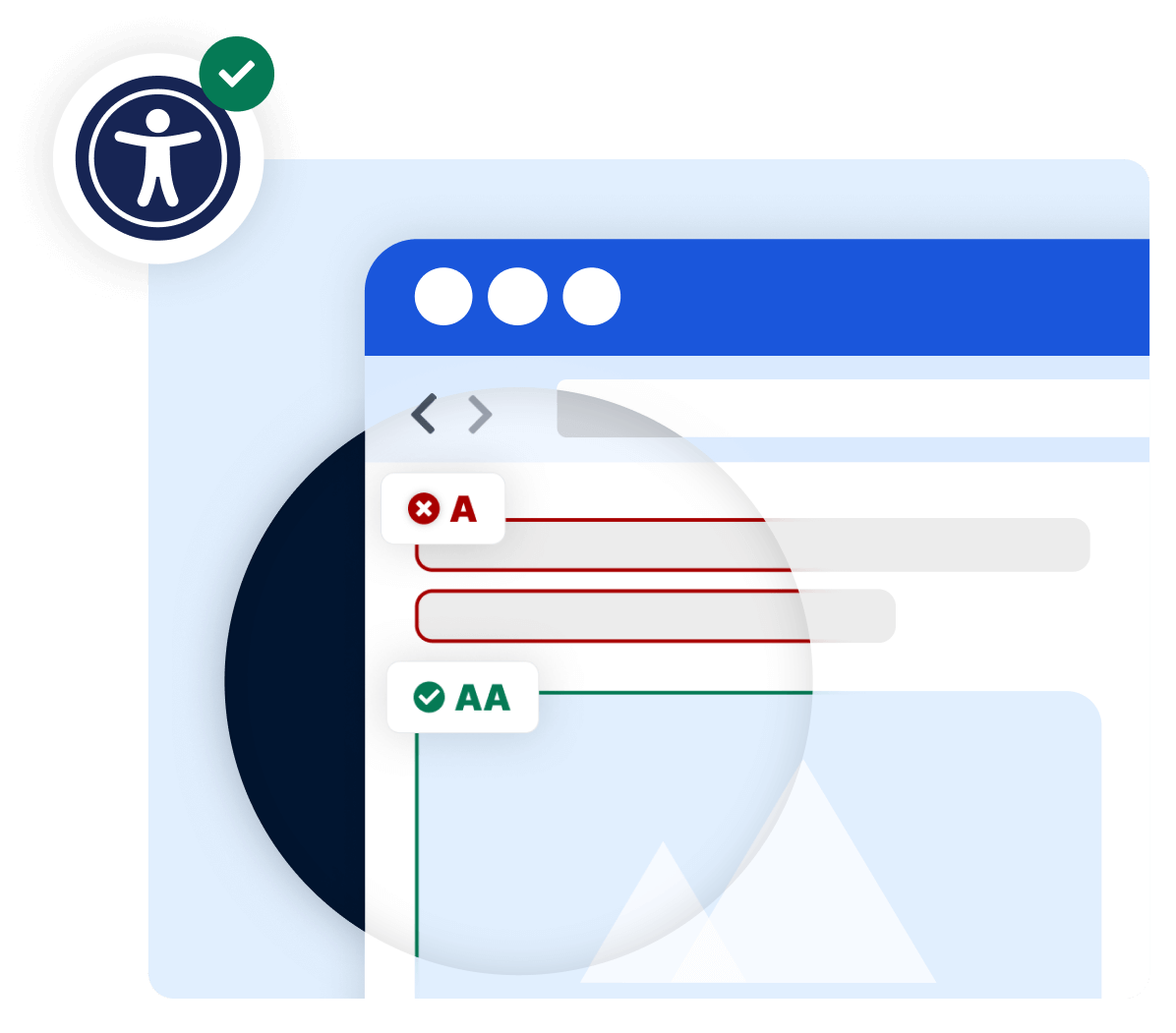
Access to the web is impossible for millions of people. SiteCockpit lets you implement accessibility quickly and efficiently!
Design impresses. Accessibility convinces.
What Does "Accessible Website" Mean in Practice?
Accessibility means: content, products, and services should be designed so they're accessible to all people with disabilities – regardless of disability, device (computer/smartphone), or language. The basis is the WCAG guidelines with their four principles: perceivable, operable, understandable, and robust.
SiteCockpit Keeps You on Top of Compliance Requirements
easyMonitoring combines automated tests and manual reviews – including mobile view. This lets you prioritize requirements, reduce risk (such as fines), and document compliance with the standards over the years.
FAQ: Accessible Website & the Law
Since 28 June 2025, the Accessibility Strengthening Act (BFSG) requires all companies offering products or services in electronic commerce to make their websites accessible. Exactly which page types are covered is set out in Schedule 3 of the BFSG – see the section above.
For public bodies, the BITV applies in parallel and has already been mandatory since 2019. Details on obligations, deadlines, and exemptions are in our BFSG overview.