easyLanguage: Translate Texts into Easy-to-Read and Plain Language
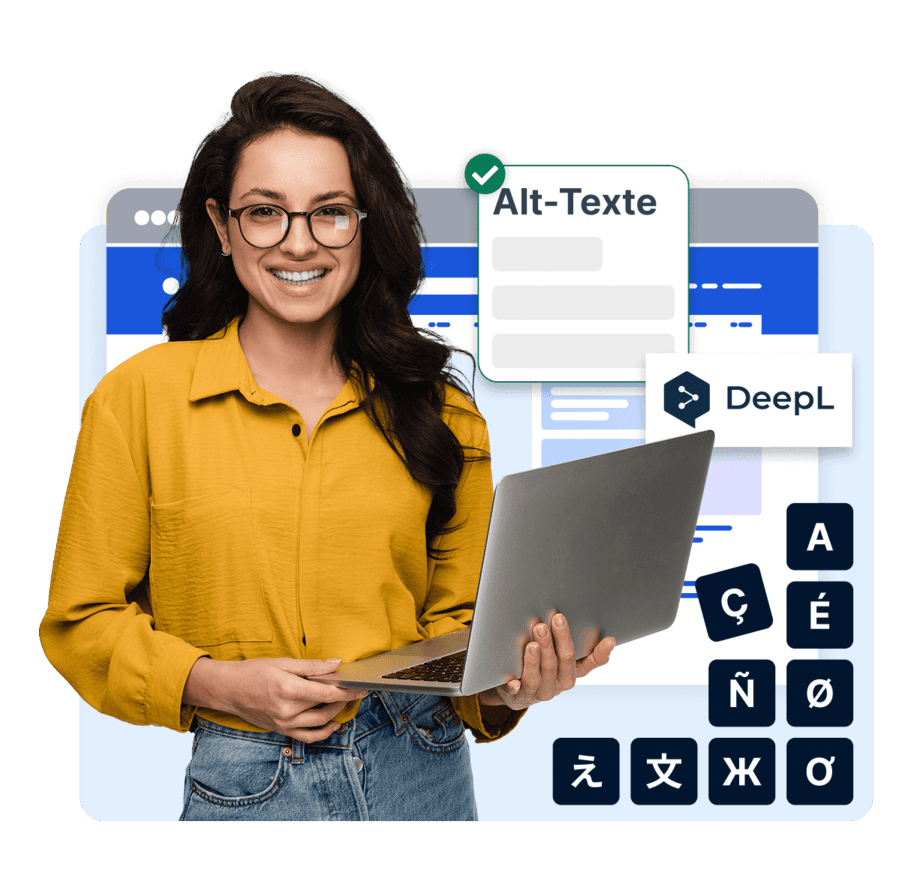
easyLanguage uses AI to translate your German texts into plain language according to DIN 8581-1 or into easy-to-read language (Leichte Sprache). You see in advance how many credits the conversion costs and copy the result directly into your CMS. Processing takes place entirely in Europe.
 Easy-to-read and plain language
 See the cost before converting
 Processing entirely in Europe
Language Is Often the Biggest Barrier
Long sentences, technical terms and bureaucratic language exclude many people. According to the LEO study 2018 by the University of Hamburg, around 6.2 million adults in Germany have only limited reading and writing skills. Understandable texts help them and everyone who wants to grasp the essentials quickly.
-
 People with learning disabilities
-
People with low literacy
-
People who are learning German
-
Older people and everyone short on time

Easy-to-Read or Plain Language?
Both make texts easier to understand but address different target groups. easyLanguage supports both variants.
Original text
Typical wording on many websites.
- Standard
- none
- Target group
- experienced readers
- Example
- Use of the service is subject to prior registration.
 For many websites
Plain language
Clear and direct, close to standard language.
- Standard
- DIN 8581-1
- Target group
- broad audience, including people with low literacy
- Example
- To use the service, you need to register first.

Easy-to-read language
Very short sentences, difficult words are explained.
- Standard
- DIN SPEC 33429
- Target group
- mainly people with learning disabilities
- Example
- You want to use the service? Then you must sign up first.
Tailored to Your Target Group
Before each conversion, you decide what the text should look like.

Gender-fair language
You decide whether the text uses gender-fair wording.
Form of address
Choose whether readers are addressed formally or informally.

Table of contents
Longer texts can get a table of contents for orientation.

Glossary
Difficult terms are explained in a glossary.
Four Steps to an Understandable Text
No detours: paste the text, choose settings, convert and copy.
Paste text
Copy the text you want to simplify into easyLanguage.
Try it now →
See the cost
Before converting, easyLanguage shows how many credits are needed.
About credits →
Convert
The AI translates the text into easy-to-read or plain language and shows statistics on the result.
AI features →
Copy
Review the result and copy it into your CMS. Earlier conversions are available in the history.
Try it now →Secure and Traceable
easyLanguage is built for professional use in companies and public authorities.
History of all conversions
Earlier texts remain saved so you can reuse results later.
Try 30 days for freeRelevant for authorities
Under § 4 BITV 2.0, German federal authorities provide explanations in easy-to-read language on their home page.
Contact usTypical Rules of Easy-to-Read Language
Easy-to-read language follows fixed rules. You will see these features in almost every text in German Leichte Sprache.
One idea per sentence
Short sentences with one statement. Each sentence starts on a new line so that the text is clearly structured.
Explain difficult words
Technical terms are avoided or explained directly in the text. Long German compound words are split with a hyphen or a middle dot.
Address readers directly
Active sentences and direct address make clear who should do something. Negations and the subjunctive are avoided where possible.
Have texts reviewed
Texts in easy-to-read language should ideally be read and checked by people from the target group before publication.
Start with These Texts
Not every text has to be simplified right away. Start with the pages that decide between success and abandonment.

Home page and about us
Here visitors decide within seconds whether they understand your offer and stay.
Try it now →Ordering and booking
Information on delivery, payment and cancellation is often complicated. Understandable texts prevent abandonment and queries.
Try it now →
Help and FAQ
People looking for help need clear answers. This also applies to your accessibility statement.
easyStatement →Notices and leaflets
Authorities reach more people with understandable leaflets and receive fewer queries.
Contact us →When to Use Which Language Form
Plain language is the right standard for many websites: it makes texts easier to understand for a broad audience without sounding simplified. Easy-to-read language is an additional offer for people with learning disabilities. It complements the original text but does not replace it. The version in standard language remains legally binding.
-
Plain language: product pages, FAQs, forms and instructions
-
Plain language: customer communication and help pages
-
Easy-to-read language: key information about your offer
-
Easy-to-read language: explanations for German authorities under § 4 BITV 2.0
Frequently Asked Questions About easyLanguage
Plain language according to DIN 8581-1 stays close to standard language and addresses a broad audience. Easy-to-read language according to DIN SPEC 33429 uses very short sentences and explains difficult words. It is aimed mainly at people with learning disabilities.
Make your texts understandable for everyone
Try easyLanguage for 30 days free of charge or get personal advice.