European Accessibility Act (EAA): The EU Directive for Digital Accessibility Explained
The European Accessibility Act (EAA) is the central EU directive for digital accessibility: it requires Member States to establish uniform requirements for products and services for people with disabilities. In Germany, the directive was implemented through the Accessibility Strengthening Act (BFSG). SiteCockpit helps you meet the EAA's requirements in practice, without a system change.

The Key Facts at a Glance
The European Accessibility Act at a Glance
These four points summarize what the directive regulates and why it matters for companies in Germany.
-
 Officially: Directive (EU) 2019/882, adopted on 17 April 2019 by the European Parliament
-
Applicable EU-wide since 28 June 2025 – the basis for national laws such as the German BFSG
-
As an EU directive, it is addressed to Member States, not directly to individual companies
-
Aims to improve digital participation for around 87 million people with disabilities in the EU
 Harmonized requirements for the entire EU single market
Covers digital products and services such as online shops, banking apps, and e-books
Technical basis: EN 301 549 and WCAG 2.2
Implemented in Germany through the Accessibility Strengthening Act (BFSG)
Harmonized requirements for the entire EU single market
Covers digital products and services such as online shops, banking apps, and e-books
Technical basis: EN 301 549 and WCAG 2.2
Implemented in Germany through the Accessibility Strengthening Act (BFSG)
What Is the European Accessibility Act?
The European Accessibility Act (EAA), officially Directive (EU) 2019/882 of the European Parliament and of the Council, was adopted on 17 April 2019. The directive's goal is to harmonize accessibility requirements for products and services across the European Union, creating an accessible single market for everyone.
As an EU directive, the EAA is initially addressed to Member States, not directly to companies. Each state had to transpose its provisions into national law by 28 June 2022. In Germany, this was done through the Accessibility Strengthening Act (BFSG), which has been binding for companies since 28 June 2025.
Before the EAA, the EU had a patchwork of national accessibility rules. The directive creates, for the first time, a single framework that brings together technical and legal aspects – from online services to ATMs to e-books.
Which Products and Services Does the EAA Cover?
The directive covers a broad range of digital offerings – from everyday online services to hardware with a digital interface.
E-Commerce & Online Retail
Webshops, booking portals, and digital marketplaces must be accessible.
Banking & Payment Services
Online banking, ATMs, and payment terminals fall under the directive's requirements.
Communication & Media
Telecommunications services, e-books, and audiovisual media services must be made accessible to people with disabilities.
Travel & Mobility
Ticket machines, check-in terminals, and digital travel information are also covered by the EAA.
EAA and BFSG: How Are the EU Directive and German Law Connected?
A directive such as the EAA is not directly applicable EU law – it sets a binding goal for Member States, and the actual implementation happens through national laws. Companies should understand this difference from an EU regulation when relying on a legal basis.
-
EAA = EU directive, sets goals – no direct effect on companies
-
BFSG = German implementing law, binding since 28 June 2025
-
Other EU states have their own implementing laws as well
-
In substance, the requirements are largely consistent across the EU

The EAA Timeline: Key Milestones
From the directive's adoption to full application, several years passed – with clearly defined deadlines for EU Member States and for companies.
Directive Adopted
The European Parliament adopts Directive (EU) 2019/882, establishing the legal basis for uniform accessibility requirements across the EU.
Transposition Deadline for EU States
EU Member States must transpose the directive into national law by this date – in Germany, this is done through the BFSG.
Application Begins
Companies must meet the requirements of the EAA, or of the respective national implementation, with no transition period for most digital offerings.
Extended Transition Periods
Extended deadlines apply until 2027 for certain product categories, and even until 2030 for certain existing services using already-deployed products.
New: AI-Powered Accessibility
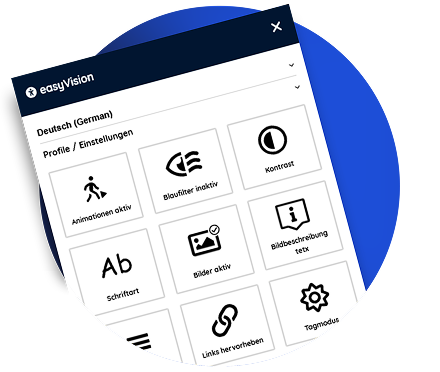
Check EAA Compliance with easyMonitoring
easyMonitoring automatically checks your digital offerings for compliance with WCAG 2.2 and gives you prioritized actions to meet the EAA's requirements.
Outlook: How Is Enforcement of the EAA Progressing?
Application of the EAA since June 2025 is only the beginning. Several EU states have started actively monitoring compliance with the directive in 2025 and 2026: France has already issued formal warning notices to major retailers, Sweden has launched market surveillance, and in the Netherlands, the regulator ACM is specifically reviewing online services and electronic communications services.
For companies, this means treating accessibility as an ongoing effort, not a one-time project. Continuous monitoring helps identify new requirements and updates to underlying standards such as WCAG early on.